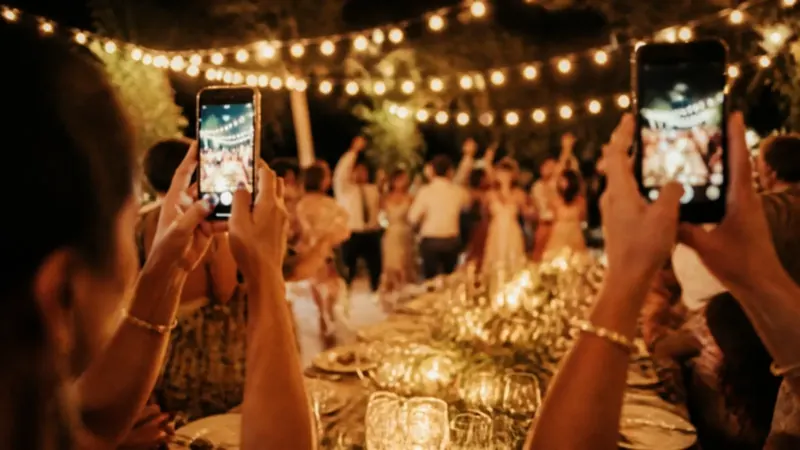
Your 2027 wedding planning timeline, month by month
What to book and when for a 2027 wedding: venue, photographer, save-the-dates, invitations and a plan for guest photos. A US timeline in stages, no panic.
 By Eduardo Boscá · 6 min read
If you're getting married in 2027, now is a good time to get organized. There's still room, but the first decisions are the ones that book up fastest: the date, the venue and a few key vendors.
For context, the average engagement lasts 18 months, according to Zola's 2026 First Look Report, a survey of more than 11,500 couples. You don't need that long. This guide breaks the planning into stages. It isn't a rule. It's an order that keeps you from rushing and from last-minute decisions.
Before you start: three things that sort out everything else
- A rough date. With a month and a season, you can already ask about availability.
- A budget with a ceiling. A total figure and a maximum you won't go over.
- A draft guest list. It doesn't need to be final. You just need to know if you're closer to 60 or 200 people, because that changes the venue, the catering and almost everything else. The average in 2025 was 117 guests, per The Knot's 2026 Real Weddings Study.
With those three answers, every conversation with a vendor is shorter and more useful.
12 to 10 months before: what gets booked first
This is the stage for the big bookings. The Knot suggests booking the venue, photographer, videographer and caterer 12 to 18 months out. If you're already inside that window, this is the first thing to do.
- Venue. Tour only a few, with your questions ready: capacity, end time, whether catering is in-house and what's included in the rental.
- Photographer and videographer. Look at full weddings, not just the best shots on their Instagram. Ask how they work on the day and what the package includes.
- Caterer. If the venue doesn't have one, it's next on the list.
- Lock in the date. As soon as the venue confirms, the date stops being approximate.
If you're planning a spring or summer 2027 wedding, this stage is right now.
9 to 7 months before: style and giving guests a heads-up
With the basics booked, it's time to shape the wedding. The Knot puts the DJ or band, florist, officiant, hair and makeup, and attire in the 9-to-12-month window.
- Style. Colors, type of celebration, the feel of the day. It guides the decor, the flowers and the stationery.
- Dress and suit. The Knot notes that wedding attire can take a long time to produce, so start looking now.
- Music and officiant. Ceremony, cocktail hour and reception can each have a different setup.
- Wedding website and registry. Get both live before the save-the-dates go out, so guests have somewhere to look.
- Save-the-dates. The Knot recommends sending them six to eight months before, leaning toward eight if it's a destination wedding or a holiday weekend.
6 to 4 months before: the details people notice
This is where the smaller decisions come in, the ones that make the wedding yours.
- Wedding party. Decide who'll stand with you and what each person handles.
- Cake, rentals and transportation. The Knot places these 6 to 9 months out.
- Hotel room blocks. If guests are traveling, set them up and add them to your website.
- Tasting. Bring the list of allergies and dietary restrictions you already know about.
- Honeymoon. If you're traveling far, book well ahead.
3 to 2 months before: stationery and the order of the day
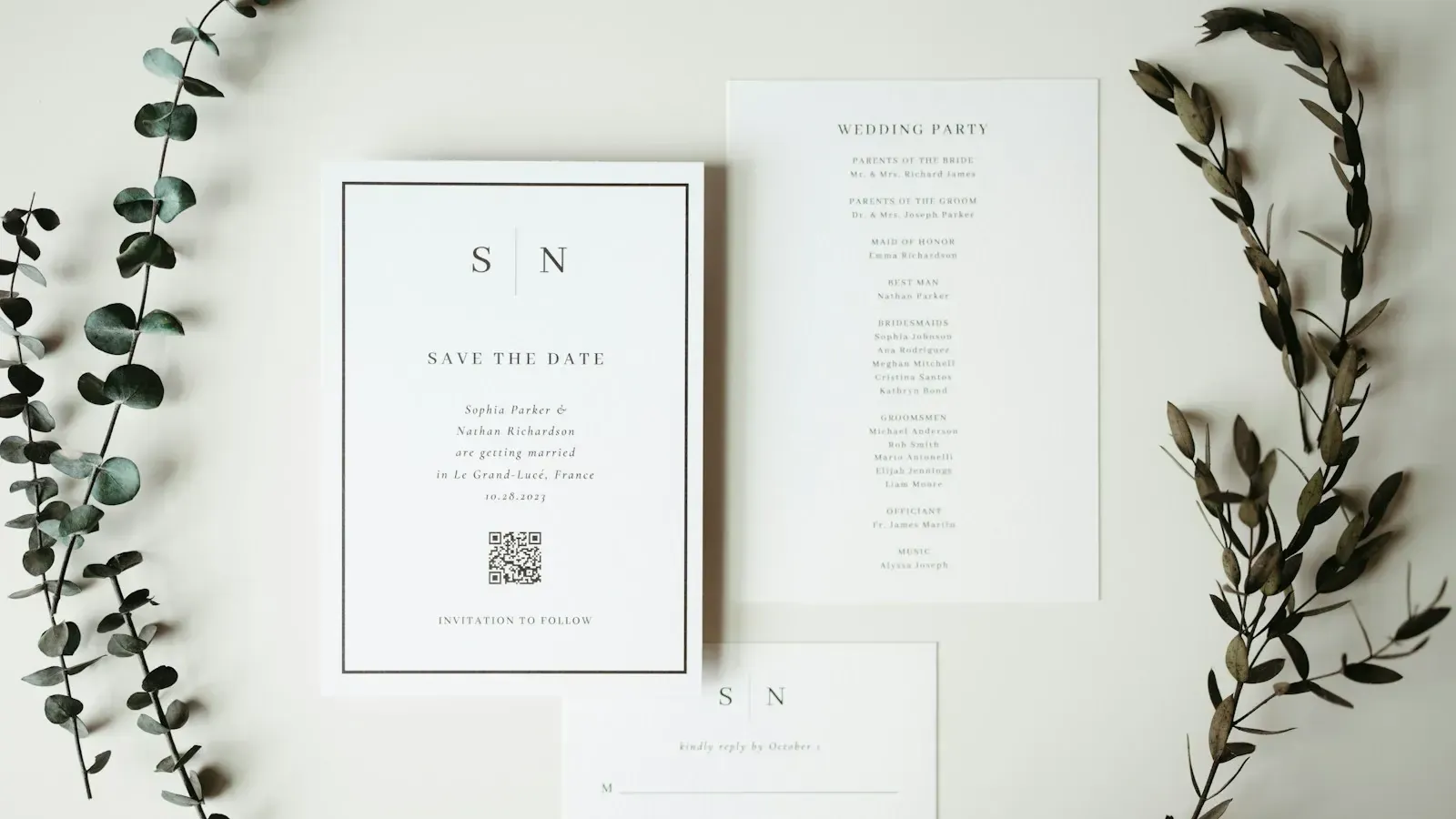
According to The Knot, the best time to order pre-designed invitations is around 12 to 14 weeks before the wedding. Have them ready to mail at least 10 weeks out, and send them six to eight weeks before (closer to eight for a destination wedding or paper RSVPs). The day-of stationery (menus, seating chart, table numbers) gets prepared alongside it.
- Wedding bands. Order them early if you want them engraved.
- Ceremony. Readings, music, who speaks and in what order.
- Favors. If someone else is making them, ask about lead times.
- Guest photos. Decide now how you'll collect them. If you're putting a QR code on the invitations, the tables or a sign, it has to exist before the stationery goes to print. Leave at least a couple of weeks of margin.
This last one often gets forgotten. And when you think of it the week before, it's too late to put it on any sign.
The last month: finalize and share the details
- Final headcount. Chase the last RSVPs. The venue and caterer need numbers for the seating chart and the menu.
- Marriage license. Rules vary by state and county, including how far ahead you can apply and how long the license is valid. Check with the county clerk where you're getting married.
- Day-of timeline. One sheet with times for the venue, the DJ and the photographer.
- Final payments and tips. Write down what gets paid beforehand and what gets handed out on the day.
- Final fittings. Dress, suit, hair and makeup trial.
The last week: delegate
- Confirm deliveries: flowers, cake, rentals, transportation.
- Put together a small emergency kit: sewing kit, Band-Aids, phone charger.
- Pick one person you trust to handle anything unexpected on the wedding day. It shouldn't be either of you.
- Remind guests of the practical stuff: times, address, parking and how to share their photos.
Timeline at a glance
| Stage | The main things |
|---|---|
| 12–10 months | Date, budget, venue, photographer, videographer, caterer |
| 9–7 months | Style, attire, music, officiant, website and registry, save-the-dates |
| 6–4 months | Wedding party, cake, rentals, transportation, room blocks, tasting |
| 3–2 months | Order and mail invitations, wedding bands, ceremony, plan for guest photos |
| 1 month | Final headcount, marriage license, day-of timeline, payments, fittings |
| 1 week | Confirmations, emergency kit, delegate |
If you're behind on a stage, that's fine. What matters is booking early what sells out (venue and key vendors) and not leaving anything that depends on the printer for the last week.
Frequently asked questions
How far in advance should you start planning a wedding?
There's no minimum, but a year or more gives you room to choose a venue and vendors without rushing. Zola's 2026 survey puts the average engagement at 18 months. You can do it in less: you just have to prioritize the bookings.
When do save-the-dates go out, and when do invitations?
The Knot recommends save-the-dates six to eight months before the wedding and invitations six to eight weeks before. For a destination wedding, lean toward the earlier end of both.
Which vendor should you book first?
The venue, because it sets the date. After that, the vendors whose calendars fill up fastest. The Knot puts the photographer, videographer and caterer in the same 12-to-18-month window as the venue.
When should you think about the photos your guests will take?
Before you order the invitations, about three months out. That way the QR code or instructions can go on the invitations, the menus or the signs.
If you want your guests to take photos into one shared album with the feel of a roll of film, you can try Carrete free with up to 5 people and see how it works at a wedding before you decide.